
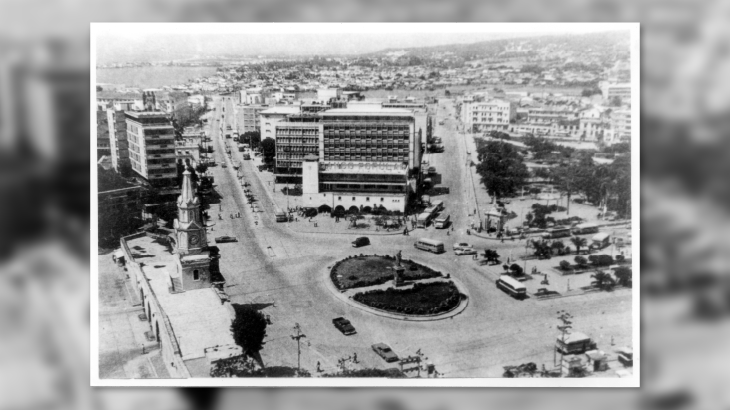
Cuadernos de Historia Económica - The history of La Matuna in Cartagena de Indias, 1890 - 2022

Cuadernos de Historia Económica
Number: 
64
Published: 
Authors:
Andrés Felipe Parra-Solanoe
Classification JEL: 
N96, R11, R14
Keywords: 
Cartagena de Indias, La Matuna, Historic Center.

The most recent

María Teresa Ramírez-Giraldo, Karina Acosta, Olga Lucia Acosta Navarro, Lucia Arango-Lozano, Fernando Arias-Rodríguez, Oscar Iván Ávila-Montealegre, Oscar Reinaldo Becerra Camargo, Leonardo Bonilla-Mejía, Grey Yuliet Ceballos-Garcia, Luz Adriana Flórez, Juan Miguel Gallego-Acevedo, Luis Armando Galvis-Aponte, Luis M. García-Pulgarín, Andrés Felipe García-Suaza, Anderson Grajales, Daniela Gualtero-Briceño, Didier Hermida-Giraldo, Ana María Iregui-Bohórquez, Juliana Jaramillo-Echeverri, Karen Laguna-Ballesteros, Francisco Javier Lasso-Valderrama, Daniel Márquez, Carlos Alberto Medina-Durango, Ligia Alba Melo-Becerra, María Fernanda Meneses-González, Juan José Ospina-Tejeiro, Andrea Sofía Otero-Cortés, Daniel Parra-Amado, Juana Piñeros-Ruiz, Christian Manuel Posso-Suárez, Natalia Ramírez-Bustamante, Mario Andrés Ramos-Veloza, Jorge Leonardo Rodríguez-Arenas, Alejandro Sarasti-Sierra, Bibiana Taboada-Arango, Ana María Tribín-Uribe, Juanita Villaveces
Wilmer Martinez-Rivera, Manuel Darío Hernández-Bejarano
Carlos David Ardila-Dueñas, Joel Santiago Castellanos-Caballero, Carlos David Murcia-Bustos

Abstract

La Matuna is an area located in the heart of the historic center of Cartagena de Indias, between El Centro, San Diego and Getsemaní, which makes it an area of special interest for the city. Despite its location and some constructions that occurred at the end of the 19th century and beginning of the 20th century, urbanization is relatively recent as it formally began in 1952. This document describes the urban development of La Matuna between 1890 and 2022, explaining the changes that occurred and the main factors that influenced its evolution. The results show that the urban development of La Matuna seems to be associated with two fundamental aspects of the city: (i) economic and social changes; and (ii) the evolution in urban planning. On the one hand, economic booms and busts determined the demand for urban land throughout the analyzed period. In addition, the urban planning plans also affected the urbanization dynamics of the sector due to the stimuli established in the urban standards defined during the years of study for the different sectors of the city.